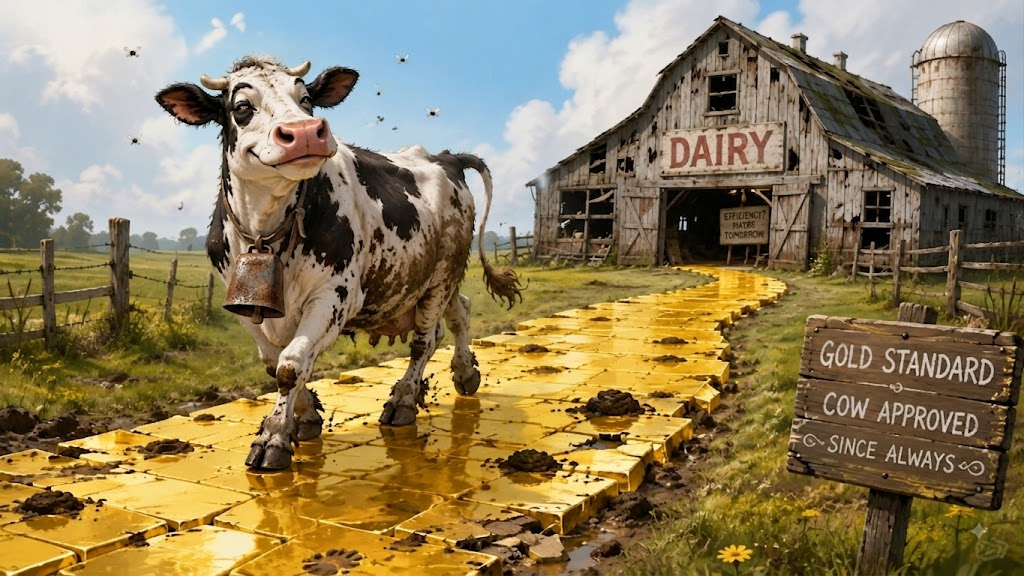
There is an old process-improvement warning about paving the cow path. The idea is simple: if people have worn an inefficient path across a field, pouring concrete over it does not make the route better. It only makes the old route permanent.
Organizations do the same thing with technology all the time.
A workflow develops over years. Someone adds an approval after a problem. Another team creates a spreadsheet because two systems do not connect. A report survives because an executive once asked for it. Employees create workarounds to keep customers moving. Eventually the workaround becomes the process.
Then someone asks where AI can help.
That is where the danger begins. AI can make the existing workflow faster, easier to scale, and less dependent on manual effort. But if the underlying workflow is poorly designed, the organization may simply preserve the problem and add technology around it.
- Poor-quality data does not become trustworthy because an algorithm analyzes it more quickly.
- An unnecessary report does not become valuable because generative AI produces it in seconds.
- A weak customer-service policy does not become customer-centric because a chatbot communicates it instantly.
In each case, the technology may create a productivity gain. It may even create an impressive demonstration. What it does not necessarily create is a better business outcome.
That distinction matters because AI lowers the cost of automating work. Tasks that once required custom development can increasingly be automated with less time, less technical effort, and less friction. That is good news, but it also makes poor decisions easier to scale.
Before automating the existing process, leaders should ask a more basic question: if we were designing this work today, would we build it this way?
If the answer is no, do not pave the cow path.
Challenge the route first. Remove work that no longer creates value. Simplify unnecessary approvals and handoffs. Standardize the information and decisions that truly matter. Then decide where technology can make the redesigned process faster, more accurate, or more scalable.
The goal is not to automate more work. The goal is to create a better system of work.