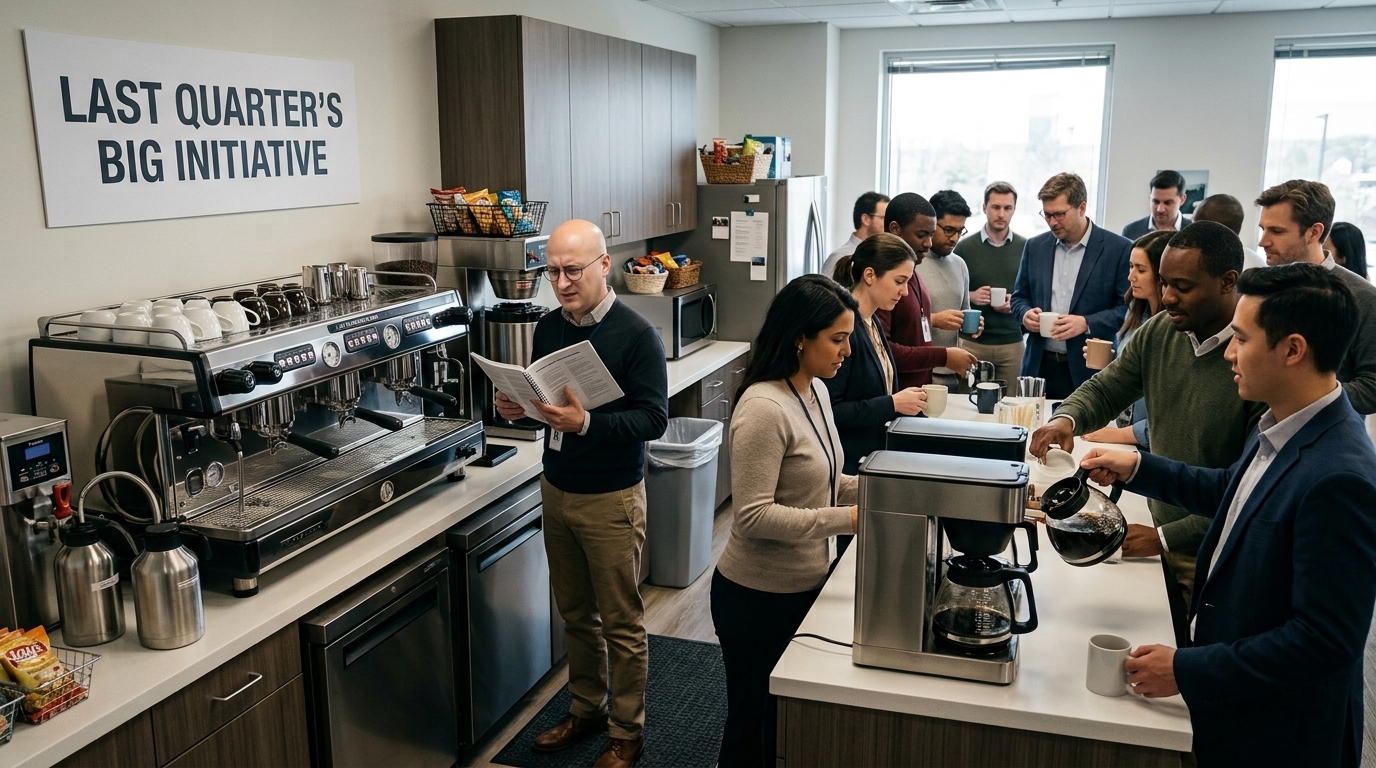
His culinary résumé has two entries: oatmeal and hot dogs. So when my dad recently started talking about getting an espresso machine for Christmas, I had questions.
I am a classically trained chef, and I could not figure out how this man was suddenly going to transform into a home barista. Was he planning to grind his own beans? Learn the difference between a cappuccino and a flat white? Start steaming milk and making frappés for the neighbors?
Still, we started looking at espresso machines.
Before long, he was considering machines with steam wands, special milk containers, multiple settings, and enough features to operate a small coffee shop. Some cost several thousand dollars. I was howling as he imagined all the wonderful drinks he and my mom could make.
The machine would probably have produced excellent coffee. It also would have required them to learn how to use it, clean it, maintain it, and change a routine they have followed happily for years.
After three or four drinks, I could already picture the machine sitting on the counter as a very expensive monument to good intentions.
Then I finally asked the most basic question:
“What are you actually trying to make?”
They did not want espresso. They did not want cappuccinos, frappés, or a new morning hobby. They wanted warm, foamed milk to add to the coffee they already enjoyed.
So I bought my mom a $15 handheld Keurig frother. Problem solved.
Companies Make the Same Mistake Every Day
A leader sees a new technology, watches another company describe its success, and immediately pictures the benefits inside their own business. Soon, the organization is shopping for the corporate equivalent of a $4,000 espresso machine.
The purchase comes before anyone clearly defines the problem. Nobody asks how the work happens today, whether the underlying process makes sense, what employees would need to change, or whether the organization can support all those impressive new features.
Then the technology arrives.
People struggle to incorporate it into their work. Adoption stalls. The promised value never appears. A few months later, the purchase is dismissed as another flash-in-the-pan idea that “didn’t work.”
This is not an argument against ambitious technology investments. Sometimes the espresso machine really is the right answer. But that decision should come after the organization understands the outcome it needs, the work required to produce it, and the capabilities necessary to sustain it.
The right solution may be a sophisticated AI platform, a clearer process, better data, a repaired handoff, additional training, or simple automation that solves the immediate problem.
Start with the outcome, not the product. Understand the work before adding the technology. Then choose the simplest solution capable of delivering the value.
Before spending $4,000 on the espresso machine, make sure all you really want is foamed milk.