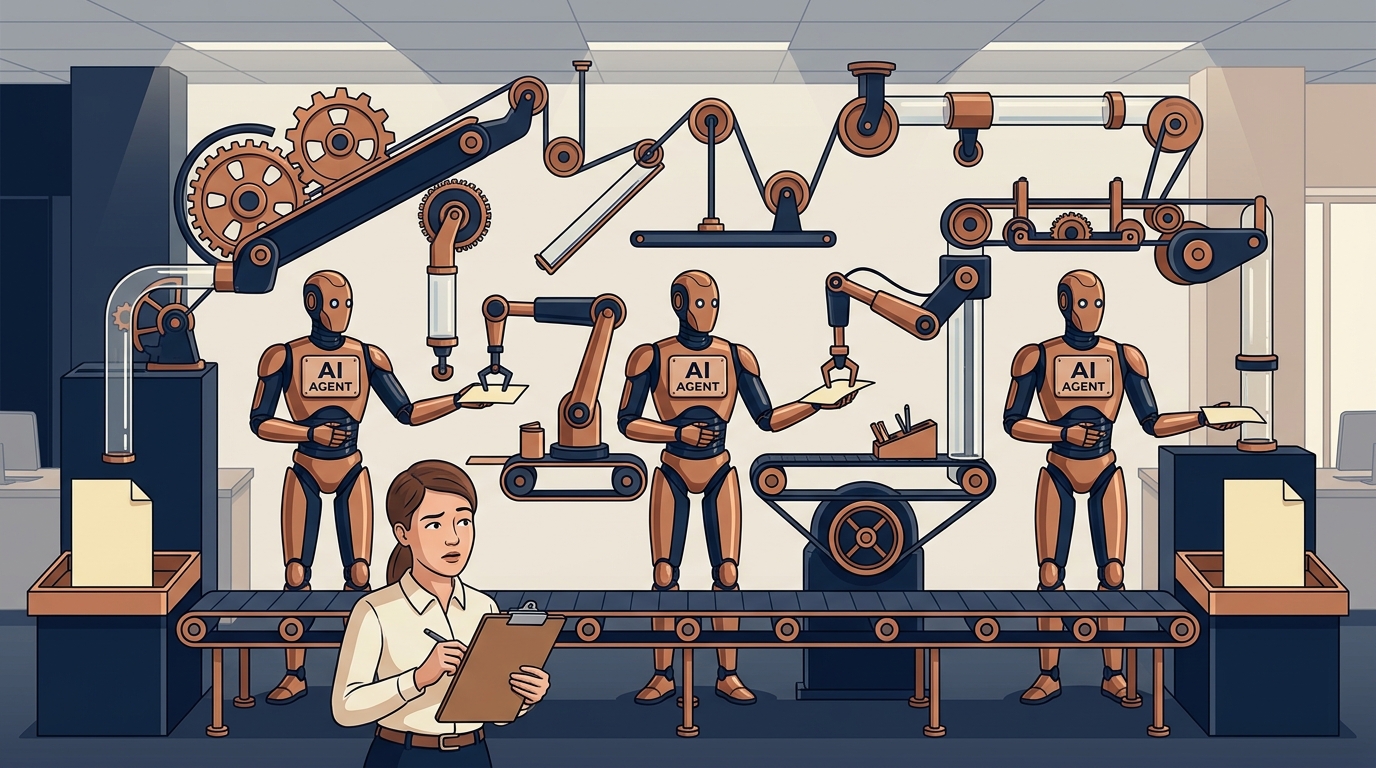
The rise of AI agents has triggered a familiar corporate reflex: assuming the newest technology has made everything that came before it obsolete.
Gartner recently published research asking whether AI agents will replace robotic process automation and business process automation. The full recommendation is available only to subscribers, but the public abstract confirms that application leaders are actively questioning whether their existing automation technologies are now outdated.
I believe this is the wrong starting question because it assumes too much. The question is not which technology won. It is which technology is best suited for the task.
Different Technologies Solve Different Problems
- RPA remains useful when work is repetitive, rules-based, high-volume, and expected to produce the same result every time. Moving validated information between systems or applying a fixed business rule does not necessarily require an agent.
- Business process automation and workflow tools remain valuable when the sequence of activities, approvals, controls, and handoffs is known. They provide structure, visibility, and auditability across the process.
- Machine learning is well suited to prediction and pattern recognition. Demand forecasting, predictive maintenance, anomaly detection, and risk scoring are analytical problems, not automatically agentic ones. MLOps is the discipline used to deploy, monitor, and maintain those models in production.
- AI agents add value when the work requires interpreting unstructured information, weighing context, choosing among valid paths, or adapting the next action as conditions change.
The Strongest Design May Combine All Four
An agent might interpret an unusual customer request. A machine-learning model might calculate its risk. A workflow could route the decision through the appropriate approval. RPA could then record the approved transaction in a legacy system.
This is also why starting with the technology is especially dangerous when the organization does not have its house in order. If the process lacks a clear outcome, reliable inputs, decision rights, controls, and defined exception paths, adding an agent will not create that discipline. It may simply introduce more variability into an already unstable system.
Start With the Work
- What must be exact and repeatable?
- Where does meaningful variability exist?
- Where does judgment add value?
- What decisions and actions require controls?
- What business outcome are we trying to improve?
Then choose the technology.
AI may be the newest tool in the toolbox. That does not make it the best tool for every job or the right place to begin the conversation.